Father Holding Son Embroidery Design Review
First Impression: Warm, Timeless, and Brand-Ready
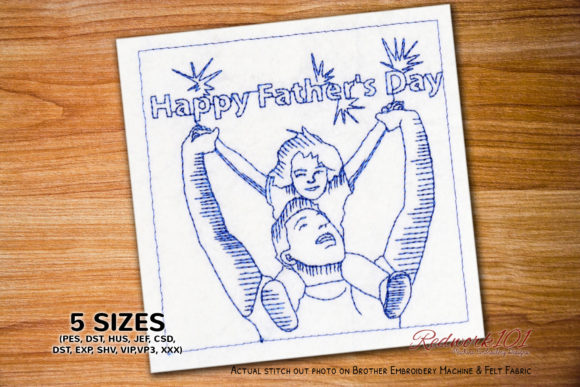
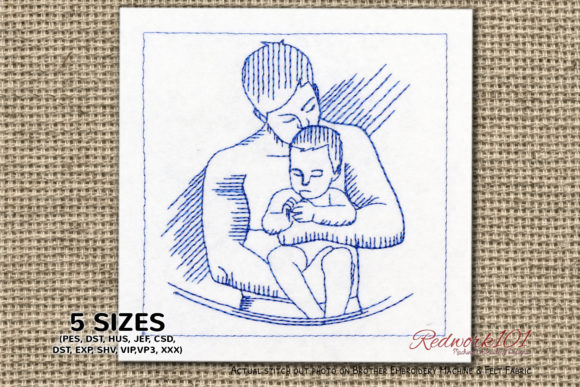
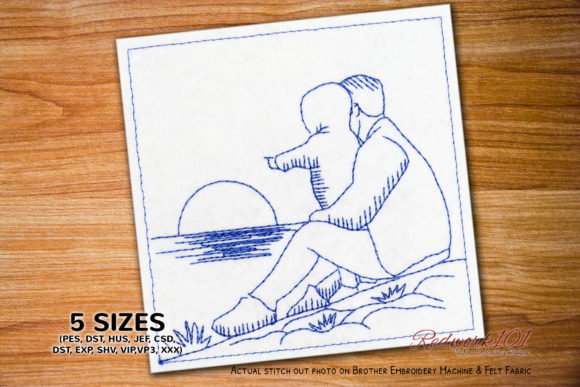
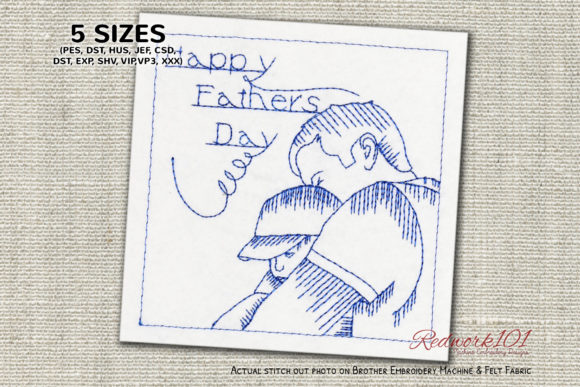
As an embroidery designer who’s developed hundreds of commercial designs for small businesses—from neighborhood bakeries to indie florists—I opened Father Holding Son expecting sentimentality. What I found instead was a quietly confident design that balances emotional resonance with professional execution. The title alone signals clear intent: this isn’t just decorative—it’s narrative-driven, relationship-focused, and rooted in authenticity. Based on the description—“a high-quality embroidery for your next sewing project”—and its placement in the Father S Day category, Father Holding Son reads as classic rather than trendy, warm rather than cutesy, and intentional rather than generic. That’s critical for small business merch: customers don’t buy slogans—they buy meaning, consistency, and craftsmanship.
Real-World Performance Across Business Applications
Father Holding Son shines where many sentimental designs falter—in versatility. As a machine embroidery design, it translates exceptionally well across common small business touchpoints:
- Embroidered patch: Works beautifully as a sew-on or iron-on patch for staff aprons, tote bags, or product packaging accents. Its clean silhouette holds integrity at 2.5”–3.5” sizes—ideal for boutique merchandise or branded customer gifts.
- Apron embroidery: Positioned on the chest or lower pocket, Father Holding Son adds quiet dignity to café or craft studio staff uniforms—reinforcing care, legacy, and human connection without overwhelming the garment.
- Cap embroidery: When scaled appropriately (2.0”–2.25” wide), it reads clearly on structured caps—especially useful for family-run businesses hosting Father’s Day events or local markets.
- Tote bag design: On natural canvas or heavyweight cotton, the design anchors branding with warmth—not flash. It avoids looking like clip art, which is essential for handmade product presentation.
- Custom apparel & product labels: Paired with minimalist typography (e.g., “Est. 2018” or “Handcrafted in Portland”), Father Holding Son elevates work shirts, pet brand bandanas, or floral shop wraps—adding emotional weight without sacrificing polish.
Where to Use Father Holding Son Thoughtfully
This isn’t a one-size-fits-all embroidery file. For best results, apply strategic restraint:
- Avoid ultra-small patch sizes (<1.75”). Fine detail in the figures’ contours may blur or vanish—test at 2” first.
- Caps and curved surfaces demand careful digitizing. If the original Father Holding Son embroidery file wasn’t optimized for front-cap use, expect minor distortion unless re-digitized with underlay and pull compensation.
- Dark uniforms or textured fabric (like heavy twill or linen blends) require higher thread color contrast—consider charcoal grey or navy thread on light backgrounds, or bright ecru/cream on darks to maintain legibility.
- Frequent-wash items (e.g., staff aprons or reusable totes) need balanced stitch density. Overly dense fills increase wear risk; overly sparse outlines lose definition. Confirm the file’s balance before bulk production.
Brand Identity Impact: More Than Just a Motif
For small businesses building trust through authenticity, Father Holding Son does subtle but powerful identity work. It signals values—nurturing, continuity, hands-on care—without saying a word. A pet brand using it on adoption kits or a florist on gift wrap tags implies generational thoughtfulness. An Etsy seller pairing it with hand-stitched notes builds perceived value far beyond the stitch count. Crucially, it avoids seasonal obsolescence: while rooted in Father S Day, its human-centered focus makes it evergreen for year-round branding—think “family-owned since 1992” messaging or “made with love” product tags.
That said, visual consistency matters. If your other design assets lean modern-minimalist, Father Holding Son must be paired with clean fonts and ample white space. If your brand is rustic-handmade, it harmonizes naturally—but still needs testing beside your logo lockup and color palette.
Practical Designer Notes for Commercial Use
Before launching Father Holding Son into production, here’s what I do—and recommend you do too:
- Test in black and white first. Does the shape read instantly? Are negative spaces balanced? If not, adjust spacing or simplify outlines before adding thread colors.
- Verify small-patch viability. Resize to 2”, stitch out on scrap fabric matching your end-use material, and hold it at arm’s length. If features merge or proportions distort, request a simplified version from the seller—or re-digitize key elements.
- Review thread color contrast. Print a physical swatch using your intended thread palette. Digital previews lie—especially on textured or dark fabrics.
- Confirm hoop size and stabilizer needs. High stitch density demands appropriate cutaway or tear-away stabilizer. Don’t assume “medium-weight” works universally—test on your actual fabric blend.
- Create a printable mockup for client approval. Show Father Holding Son on a real apron or cap template—not just a blank rectangle. Context builds confidence.
- Compare beside existing design assets. Does it sit comfortably next to your logo, icon set, and typography? If it feels visually heavier or lighter, adjust scale or weight accordingly.
- Confirm commercial licensing. Since this is for small business merch, not personal use, verify the digital embroidery file includes rights for resale, distribution, and branded goods. When in doubt, contact the seller directly—don’t assume.
Final Thought: A Story Worth Stitching
Father Holding Son isn’t just another Embroidery file—it’s a narrative tool. For small business owners investing in custom apparel, embroidered patches, or tactile brand moments, it offers emotional precision: warm but not saccharine, simple but not shallow, timeless but never stale. Used intentionally—with attention to fabric, scale, and context—it strengthens brand identity, deepens customer engagement, and transforms everyday items into quiet ambassadors of care. Just remember: every stitch carries intention. Test it, refine it, and let it speak for the values your business already lives by.