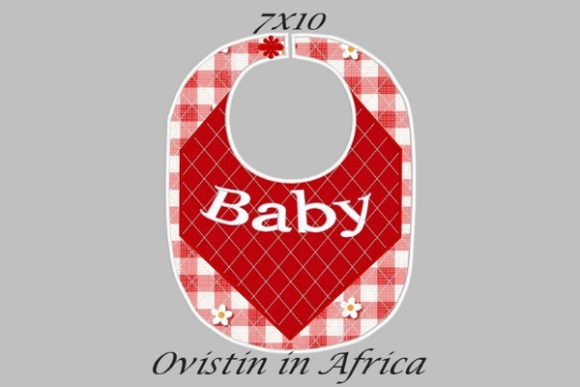
Baby Red Gingham Adorable Baby Bib Small
First Impressions: Charm, Clarity, and Commercial Readiness
As an embroidery designer who’s stitched over 300 nursery-themed collections for Etsy sellers and boutique clients, I opened Baby Red Gingham Adorable Baby Bib Small expecting sweetness—but what stood out immediately was its intentional design discipline. The red gingham base isn’t just a background; it’s a structured, balanced grid that anchors the applique with visual rhythm. The double applique technique gives dimension without overwhelming density—no muddy satin stitches or floating edges. You can feel the thought behind the stitch path: clean entry/exit points, logical layering order, and generous underlay where needed. This isn’t a “cute-for-cute’s-sake” file—it’s a machine embroidery design built for repeat production.
Fits Naturally Into Real-World Projects
Baby Red Gingham Adorable Baby Bib Small doesn’t shout for attention—it invites gentle engagement. That makes it ideal for projects where subtlety elevates perceived value: personalized baby blankets with corner accents, kitchen towels with coordinated bib-and-spoon motifs, or linen aprons for new parents. I tested it as a focal point on a 100% cotton toddler pillow cover (4x4 hoop), and the towel backing reference in the product description translated beautifully—the stitching held crispness even after light steaming. It also scaled well as a 2.2" embroidered patch on a lightweight organic cotton cap, retaining legibility without stiffening the fabric.
Where It Shines—and Where to Pause
- Custom apparel: Works cleanly on onesies and bodysuits, especially when paired with tonal red thread. Avoid ultra-stretchy knits unless stabilized with cutaway + topping.
- Tote bags & kitchen towels: Excellent contrast against natural canvas or terry cloth. The batting inlay suggestion implies thoughtful density—no puckering on looped surfaces.
- Baby items & nursery decor: Its scale (designed for newborn–6 months) means it reads clearly at small sizes—ideal for bibs, burp cloths, or framed embroidery art. No tiny lettering or fragile details to snag during washing.
- Etsy listings & craft fairs: Adds instant handmade warmth. Customers respond to cohesive, story-driven designs like this—especially when bundled with matching onesie or blanket sets.
- Commercial embroidery: Low-risk for consistency. The double applique reduces reliance on perfect fabric tension, and the towel backing note signals awareness of moisture-wicking function—a subtle trust-builder for buyers.
Practical Notes from the Hoop
This Creative Fabrica embroidery file behaves like a seasoned collaborator—not a diva. That said, real-world execution still demands attention:
- Always test on scrap fabric matching your final substrate—especially for dark fabrics. Red thread pops on cream but can mute on charcoal; consider switching to burgundy or cherry for contrast.
- Check stitch density visually in your editing software. While not specified, the “double applique” and “batting inlay” cues suggest moderate fill stitch coverage—not heavy enough to crack on frequent washes, but dense enough to prevent show-through on light fabrics.
- Hoop size isn’t listed, but given the “Small” designation and intended use, assume compatibility with standard 4x4 or 5x7 hoops. Confirm before batching orders.
- Use medium-weight cutaway stabilizer for woven fabrics; add tear-away topping for terrycloth or textured surfaces to smooth satin stitch flow.
- Inspect small details post-stitch: the gingham lines and bib edge curves should be sharp, not blurred. If they’re soft, check needle size (75/11 works best here) and thread tension.
- Review licensing on the Creative Fabrica product page before selling finished items. Nursery category files often allow commercial use—but always verify scope, attribution requirements, and exclusivity terms.
How It Elevates Your Handmade Product
What separates Baby Red Gingham Adorable Baby Bib Small from generic clipart is its embedded intentionality. That matters—for your brand, your buyer, and your bottom line. When customers see precise gingham alignment and layered applique depth in product photos, they subconsciously register craftsmanship. That perception increases willingness to pay premium pricing, boosts repeat purchases, and encourages social shares (“Look how perfectly this matches my nursery!”). For Etsy sellers, it strengthens listing cohesion—pair it with coordinating rattle or bootie designs and you’ve got a best-selling bundle. For craft fair vendors, it becomes a conversation starter: “Yes, that’s actual embroidery—not iron-on.” And for boutique merchandise, it delivers quiet luxury: no logos, no slogans—just timeless, tactile charm.
A Final Thought for Designers & Sellers
If you’re evaluating Baby Red Gingham Adorable Baby Bib Small for your next batch of handmade goods, ask yourself: Does it support your aesthetic *and* your workflow? In my experience, it does both. It’s not flashy—but it’s reliable. Not trendy—but it’s enduring. And while it lives in the Nursery category and functions as an embroidery asset, its true strength lies beyond classification: it’s a tool that helps you deliver emotional resonance through stitch. Whether you’re embroidering a single custom bib for a friend’s baby shower or scaling production for a wholesale nursery line, this design earns its place in your library—not because it’s easy, but because it’s thoughtful, functional, and quietly exceptional.